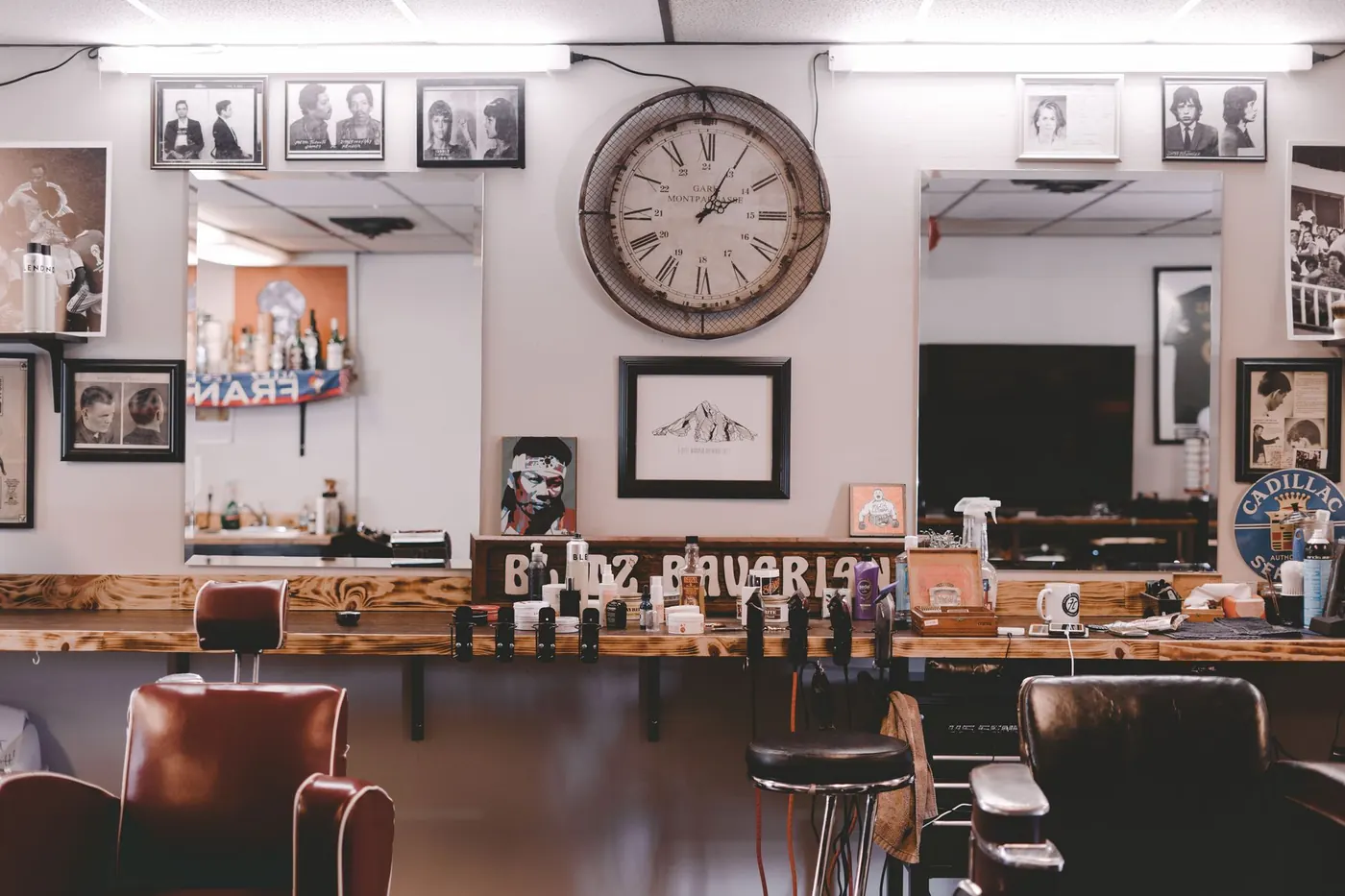
- Choose the most accurate primary Google Business Profile category, then add services with real prices.
- Build keyword targeting around neighborhoods and services, not just 'barber near me'.
- Ask every happy client for a review at checkout using a QR code or short link, and reply to all of them.
- Keep your name, address and phone number identical everywhere and publish genuine local content.
When someone types "fade near me" or "barber open now" into their phone, they usually book one of the first three shops they see. That makes local seo for barbershops one of the cheapest and most dependable ways to fill your chairs. This guide covers the essentials: your Google Business Profile, local keywords, citations, reviews, local content and the mistakes we see most often.
Start With Your Google Business Profile
Your profile is your most important local asset. For most shops it appears in the map results and often drives more visits than the website does. Treat it as a living page, not a one-time setup.
- Primary category: choose "Barber shop" if that is what you are. Add secondary categories only if they are true, such as "Hair salon" if you offer that.
- Business name: use your real signage name. Stuffing keywords into it can get the listing suspended.
- Services and prices: list each cut, beard trim, hot towel shave and kids' cut with a short description.
- Hours: keep them accurate, including holiday changes. Wrong hours cause bad reviews.
- Booking link: connect your scheduling tool so people can reserve straight from the profile.
- Photos: upload real images of your storefront, chairs, barbers and finished cuts. Add new ones regularly.
Use the posts and updates feature to share openings, promotions or events. It signals that the business is active.
Target Local Keywords That Match How Clients Search
Many owners focus only on "barber near me." Google already uses the searcher's location for that, so you will rank by being relevant and close. Your website should cover the more specific terms that reveal intent.
Build a keyword map
- Service terms: skin fade, beard trim, kids haircut, hot towel shave, line-up.
- Neighborhood terms: "barber in [neighborhood]" for each area you genuinely serve.
- Situation terms: walk-in barber, Sunday barber, wedding grooming, cuts for textured hair.
Place these naturally in page titles, headings, service descriptions and image alt text. Create a dedicated page per major service and per location if you have several shops. Avoid pages that only swap the city name, since they add little value.
Citations and Consistency
Citations are mentions of your name, address and phone number (NAP) on other sites. They matter less than they once did, but inconsistent data still confuses search engines and customers.
- Match your NAP exactly across your website, Google, Apple Business Connect, Bing Places, Yelp and Facebook.
- Add yourself to reputable directories and your local chamber of commerce.
- Check for duplicate listings, especially if you moved or rebranded, and merge or remove them.
- Pursue local links too: sponsor a youth team, join a business association or partner with a nearby gym.
Reviews: Your Strongest Ranking and Conversion Signal
Review quantity, recency and content all influence visibility, and they strongly influence whether a stranger chooses you. A steady flow beats a burst.
- Ask at the right moment: right after a good cut, when the client is checking the mirror.
- Make it effortless: put a QR code at each station and send your direct review link by text after the appointment.
- Reply to everyone: thank positive reviewers by name and mention the service. Answer negative ones calmly and offer to fix the problem offline.
- Never buy or gate reviews: offering rewards only for positive feedback violates Google's policies and risks removal.
Encourage clients to mention the service and the barber, since those details help future customers decide.
Local Content That Earns Attention
Content proves you are a real part of the community. You do not need a daily blog. A few useful pages go a long way.
- A page for each barber with their specialties and booking link.
- A guide such as "How often to get a fade" or "Beard care for patchy growth."
- Pricing and what to expect at a first visit, including walk-in policy and parking.
- Local stories: community events, charity cut days, collaborations with nearby businesses.
Add a clear FAQ and mark up your business details with LocalBusiness structured data so search engines can read them reliably.
Common Mistakes Barbershops Make
- Claiming the profile but never updating photos, hours or services.
- Using a keyword-stuffed business name.
- Listing a home address without a proper service-area setup, or using a virtual office.
- Ignoring negative reviews or arguing in the replies.
- Running a website that loads slowly or is hard to use on mobile, where most searches happen.
- Not tracking results. Watch profile calls, direction requests and booking clicks monthly.
Your Next Steps
Audit your profile this week, fix inconsistent listings, set up a review request routine and publish one useful local page. Do these consistently and the results compound. If you would rather hand it off, Growth Asteroid builds and manages local search strategies for service businesses like barbershops, from profile optimization to review systems and reporting.
Conclusion
Strong local visibility comes from accuracy, consistency and real customer proof. Keep your profile current, earn reviews steadily and give nearby clients a reason to choose your shop.
Frequently asked questions
How long does local SEO take to work for a barbershop?
Profile fixes can improve visibility within weeks, while reviews, links and content typically build stronger rankings over three to six months, depending on local competition.
Do I need a website if I have a Google Business Profile?
Yes. A website gives you pages for services and neighborhoods, supports structured data and builds trust. It also gives search engines more context than a profile alone.
How many reviews does a barbershop need?
There is no magic number. Aim to match or exceed nearby competitors in quantity and keep a steady stream of recent reviews, with a strong average rating.