- Fix your Google Business Profile first: right categories, real services, accurate hours, real photos and a booking link.
- Build one page per service, then add make-specific pages only where your team has real expertise.
- Show ASE certification, a clear warranty and written estimates so drivers trust you before they call.
- Build town pages only for places you serve, with local detail on each. Near-identical doorway pages hurt more than they help.
SEO for auto repair shops comes down to three jobs: appearing in the map results when someone's warning light comes on, proving in a few seconds that your shop is honest and competent, and making it painless to book. Everything else in this guide is detail on how to do those three things well, from Google Business Profile setup to service pages, make-specific pages, reviews and a 90-day plan.
Most drivers do not search for a shop by name. They search for a problem ("brakes grinding"), a service ("oil change near me") or a trust signal ("honest mechanic"), then choose from a handful of listings. Local SEO for auto repair shops is the work of being the obvious, credible choice at that moment, on Google Maps, in the regular results and in AI-generated answers. If you run a collision operation, read our companion guide on SEO for auto body shops, and see how the pieces fit together on our automotive marketing page.
How Drivers Search for Auto Repair
Auto repair is unusual because intent ranges from panic to planning. A driver with a flat tire wants the nearest open shop right now. A driver with a scheduled maintenance visit is comparing prices and reviews over a weekend. Good auto repair SEO covers both by matching each type of search to the page that should win it.
| Search intent | Example searches | What should win it |
|---|---|---|
| Urgent, near me | auto repair near me, mechanic open now, tire repair near me | Google Business Profile, accurate hours, click-to-call |
| Symptom | brakes grinding, check engine light on, car overheating, AC blowing warm | Service pages with a "signs you need this" section |
| Service | brake repair, wheel alignment, oil change, transmission service, diagnostics | One dedicated page per service |
| Make or specialty | European auto repair, Honda mechanic, diesel repair, hybrid service | Make and specialty pages |
| Trust | honest mechanic, ASE certified mechanic, repair shop with warranty | About page, certifications, warranty page, reviews |
| Local modifier | auto repair in [neighborhood], mechanic near [landmark] | Service area pages and your Business Profile |
People use different words for the same need. "Car repair SEO," "auto shop SEO" and "mechanic shop SEO strategies" all describe the same project, and so do the searches your customers type. Use the wording customers use on your pages, not just the wording on your invoices. A driver searches "check engine light," not "OBD-II diagnostic."
Set Up Your Google Business Profile First
For nearly every shop, the Google Business Profile does more work than the website, because it feeds the map pack and the "near me" results. Auto repair shop SEO should start here, and our full walkthrough in Google Business Profile optimization covers every field in depth. These are the points that matter most for a shop.
Categories and services
Choose the primary category that matches your core business, which for most general shops is "Auto repair shop." Add secondary categories only for work you genuinely do, such as "Brake shop," "Tire shop," "Oil change service," "Auto air conditioning repair service," "Auto electrical service," "Transmission shop" or "Car inspection station." Google's category list changes, so check the dropdown rather than copying a list from a blog post.
Then fill in the services section with real service names and short descriptions. "Brake pad and rotor replacement, all makes" tells Google and the driver far more than "Brakes."
Hours, photos and booking
Hours accuracy is a trust issue as much as a ranking issue. A driver who arrives at a locked door at what your listing said was open will not call you again, and may leave a review about it. Set special hours for every holiday and update them the week before.
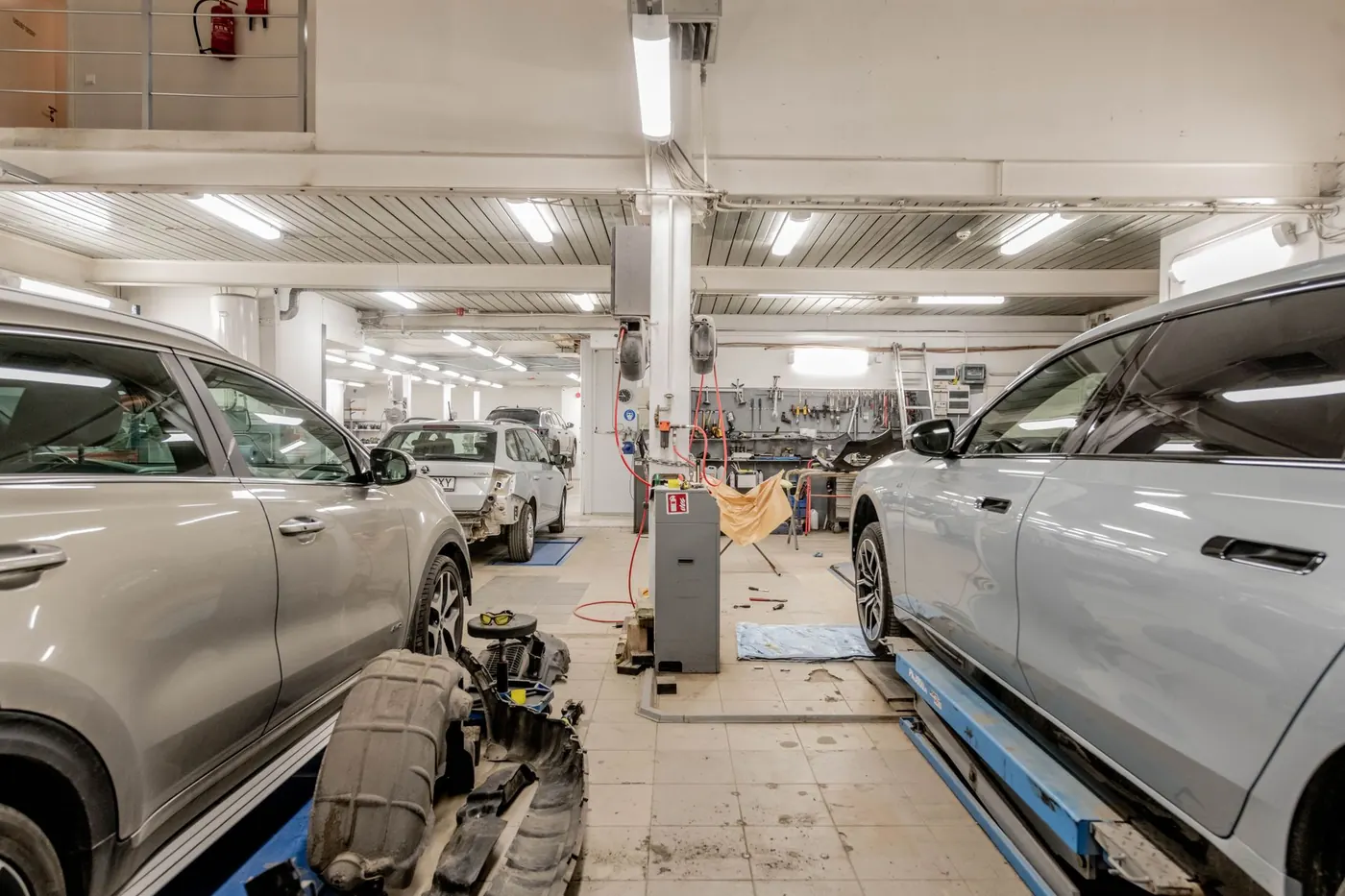
Upload real photos of your bays, your technicians, your waiting area and your team in front of the shop. Add the appointment link to your booking page. Reply to every review in a human voice, and post updates about seasonal needs such as battery checks before winter or AC service before summer.
The Website Pages That Actually Rank
A repair shop website that ranks is not complicated. It has a strong homepage, one page per major service, a handful of make or specialty pages, a few service area pages and trust pages. Thin pages that repeat "quality auto repair" across the site rank poorly and convert worse.
Service pages: a repeatable structure
Every service page should follow the same useful structure. Here is the order that works for most shops:
- A clear H1 that names the service and the city, such as "Brake Repair in [City]."
- A two-sentence summary of what you do and how a driver books, with a phone number and booking button at the top.
- The warning signs that tell a driver it is time for this service, written in their language.
- What the service includes, what you inspect and what you replace, so there are no surprises on the estimate.
- Makes and models you work on, plus your warranty on parts and labor.
- Photos from real jobs in your own shop, with short captions.
- Three to five real customer reviews for that service and a few honest FAQs.
Pricing is the hardest call. You do not have to publish exact prices, but a "typical range" or a "what affects the price" section answers the most common question and tends to win trust. Write it honestly and update it when your rates change.
Make-specific pages, including European auto repair
Drivers of specific makes often search for a specialist: "European auto repair," "BMW mechanic," "Subaru repair," "Toyota hybrid service." If your team really does that work, a page per make or family of makes can capture high-intent searches with less competition than "auto repair near me." Only build these pages if you have the tools, scan software and technician experience to back them up. Include the common issues you see, the services you do for that make and a photo or two of such vehicles in your bays.
Service area and location pages
If you draw customers from several neighboring towns, create a page for each area you genuinely serve. Each page needs real local detail, such as typical drive times, nearby landmarks and reviews from customers in that area. Do not create a page for a place you do not serve.
Trust Signals: ASE Certification, Warranties and Transparency
Car repair is a trust purchase. Drivers cannot easily judge the work, so they judge the shop. Your site and profile should make the case plainly.
- ASE certification. ASE certifies individual technicians through exams and work experience. List which technicians hold which certifications on your About page and mention them on relevant service pages. If you qualify for ASE's Blue Seal of Excellence recognition for shops, say so and use the badge.
- Manufacturer and aftermarket training. Mention factory-level training, diagnostic software and specialty tools if you have them.
- Warranty. State your parts and labor warranty in plain terms on a dedicated page and repeat it on service pages. If you belong to a nationwide warranty network, explain what that means for a traveling driver.
- Transparency. Digital inspections with photos, written estimates before work begins and the old parts policy all belong on the site.
Marking up your business details with structured data helps search engines understand these facts, and it takes a developer very little time.
Programmatic SEO for Auto Repair: Service-by-City Pages Done Right
Programmatic SEO for auto repair usually means generating many pages by combining services with cities, such as "brake repair in [Town]" across thirty towns. Done well, it captures real demand. Done badly, it produces doorway pages that Google ignores and that can harm the whole site. Our guide to programmatic SEO covers the method in general; here is how to apply it to a shop.
- Build pages only for places you serve and can reach within a reasonable drive.
- Each page must contain information that is unique to that area, such as local customers' vehicle mix, nearby roads, reviews from that area and photos of jobs for local customers.
- Do not swap the town name in a template and publish dozens of near-identical pages. If you cannot add something useful, do not publish the page.
- Start with the three to five areas that already send you customers, measure them, then expand.
- Link the pages from a clean service area hub instead of burying them in the footer.
A useful test: if a customer landed on the page, would it help them decide to call you? If the only difference between two pages is the town name, the answer is no.
How Shop Software, Online Booking and Reviews Feed SEO
The conversation about SEO software for repair shops often misses a point. The tools that help you run the shop also create the signals that help you rank. A shop-management system that sends a text after pickup with a review link produces a steady stream of fresh reviews. An online booking tool reduces the friction that loses callers who call after hours. Digital vehicle inspections with photos create content you can reuse, with permission, on the site.
Connect the pieces. Put the booking link on your Business Profile and website. Use the same shop name, address and phone number in every listing. Track calls from each channel with call tracking, so you can see which pages actually produce jobs.
Review requests deserve special attention because reviews are one of the strongest local signals and one of the strongest trust signals. Ask every customer, at the moment they are happiest, which is usually when the car is ready and the price matches the quote. Never offer discounts or gifts in exchange for reviews, and never filter to ask only happy customers, because both violate Google's policies. If you want help running this at scale, reputation and review management can automate the asking and flag problems early.
Brakes, Tires and Electrical: Specialty Pages That Convert
Specialty searches are narrower, but they often come from drivers with a clear problem and a fast decision.
Brake repair shop SEO
Drivers searching for brake work are often anxious about safety. A good brake page explains the symptoms (squealing, grinding, a soft pedal), your inspection process, the parts you use and your warranty. Add a clear call to book an inspection. Brake repair shop SEO also benefits from photos of worn parts next to new ones, with permission from the customer and clear captions.
Tire shop and tyre shop local SEO
Tire shop local SEO has to handle both emergency and planned purchases. Build pages for flat repair, new tires, alignment, rotation and seasonal swaps. If you operate in the UK, Ireland or Australia, say "tyre shop" in your copy and your headings because that is the spelling customers use. Include the brands you stock, mounting and balancing details and whether you take walk-ins. If you sell tires online, treat those pages like product pages with proper structured data.
SEO for auto electric repair
SEO for auto electric repair works best when you target specific symptoms: "car battery keeps dying," "alternator replacement," "starter not turning over," "headlight wiring repair." Hybrid and EV service pages should exist only if your team is properly trained and equipped. Drivers can tell when a shop is guessing, and so can reviewers.
A Local SEO Checklist for Auto Shops
This is the short version of an auto repair SEO manual. Use it as a monthly checklist whether you are a one-bay garage looking into SEO for car mechanics or a multi-bay shop doing local SEO for mechanics and local SEO for auto shops across several locations.
| Area | What to do | How to check it |
|---|---|---|
| Business Profile | Correct categories, services, hours, photos, booking link | Compare against the live profile each month |
| Citations | Match name, address and phone on Apple Business Connect, Bing Places, Yelp, Nextdoor and key directories | Search your phone number and look for mismatches |
| Website | Service, make and area pages with real content | Review pages with no calls or clicks |
| Reviews | A steady flow of requests and replies to every review | Count new reviews per month and response time |
| Technical | Fast mobile pages, secure site, clean internal links | Run Google Search Console and a site audit |
| Local links | Sponsorships, supplier pages, chamber of commerce, local news | Track links from local sites |
Treat the technical row seriously. Most repair customers search on a phone, often while standing next to the car, so a slow or clumsy mobile page loses calls.
A 90-Day Plan for Auto Repair Search Engine Optimization
Here is a realistic sequence for an independent shop with one location.
- Days 1 to 30, foundation. Claim and fix the Business Profile, clean up listings, confirm the website tracks calls and form fills, and publish the strongest service page, usually brakes or general repair and diagnostics.
- Days 31 to 60, expansion. Add pages for the next four to six services, publish your About and warranty pages, start a consistent review request process and add photos from real jobs.
- Days 61 to 90, differentiation. Add make-specific or specialty pages if you can back them up, build two or three service area pages from places that already send customers, and start earning local links from sponsorships and suppliers.
After day 90, keep publishing pages and reviews at a steady pace. Repair shop search engine optimization is a compounding effort, and no one can honestly promise specific rankings or timelines.
Measuring Results and Avoiding Common Mistakes
Measure what pays the bills. Track phone calls, booked appointments, direction requests and form fills, not just rankings. Use Google Search Console to see which searches bring impressions and clicks, and your Business Profile insights to see calls and direction requests. Set these up before you change anything else, so you can see what each change does.
The mistakes we see most often:
- Using a single page to cover every service, so nothing ranks well.
- Letting hours, phone numbers or addresses drift between listings.
- Publishing dozens of near-identical town pages.
- Claiming certifications or training the shop does not have.
- Ignoring negative reviews instead of replying calmly and offering to make it right.
- Using stock photos in place of real photos of the shop and team.
If you want a partner to run this for you, Growth Asteroid's local SEO service starts from $575 per month per location. If you would rather start with a diagnosis, request a free SEO audit and see where your listing and site stand today.
Frequently asked questions
How long does SEO for an auto repair shop take to work?
Fixes to your Google Business Profile, hours and reviews can show up in calls within weeks, because map results respond quickly to clearer information. New website pages usually take longer to earn visibility and need months of steady work. Nobody can honestly promise specific rankings or dates, so track calls, bookings and direction requests, not only positions.
Do I need a separate page for every service and every city?
You need a separate page for each major service, because one page cannot rank well for brakes, tires, electrical and diagnostics at once. City pages are different: build them only for places you genuinely serve, and give each one real local detail. If a page differs only by the town name, skip it.
Does ASE certification help auto repair SEO?
ASE certification is not a direct ranking factor that anyone can point to, but it strongly supports trust, which drives clicks, calls and reviews. List certified technicians on your About page, mention certifications on relevant service pages and use the badge where you are entitled to. Never claim credentials your shop does not hold.
What primary category should a car repair shop use on Google?
Most general repair shops should choose Auto repair shop as the primary category, then add secondary categories only for services they actually perform, such as brakes, tires, oil changes or auto electrical work. Specialists, like a transmission or tire shop, may be better served by a more specific primary category. Check the dropdown, since Google updates its list.
How do I get more reviews without breaking Google's rules?
Ask every customer when the work is finished and the car is ready, by text or email with a direct review link. Make it easy and ask consistently, but never offer discounts or gifts for reviews and never screen out unhappy customers. Reply to every review, positive or negative, in a calm, helpful tone.