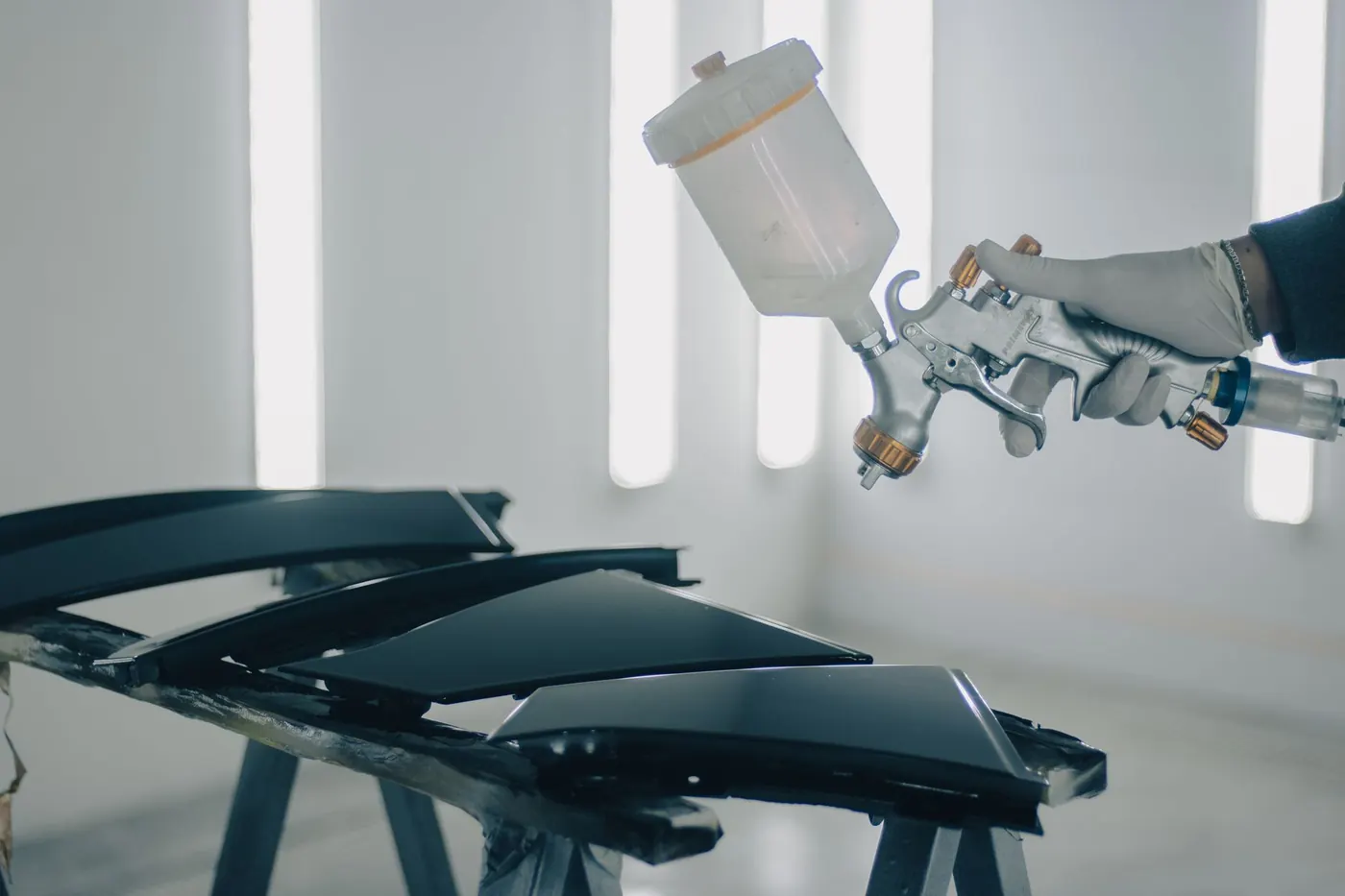
- Start with your Business Profile: the Auto body shop category, real services, before and after photos and an estimate link.
- Write insurance content that is general, honest and clear about what you do, without promising coverage or disparaging insurers.
- Show OEM certifications, I-CAR and ASE credentials and a plain-language warranty, but only claim what you actually hold.
- Add a short photo estimate form and storm-season hail pages so urgent and seasonal demand has an easy path to your shop.
SEO for auto body shops is built around a simple fact: a driver who has just been in an accident, or found a fresh dent in a parking lot, is stressed, short on time and often unsure what to do about insurance. The shop that appears in the map results, looks trustworthy and makes the next step easy usually gets the estimate. This guide shows how to build that visibility for a collision and paint business.
Auto body shop SEO differs from mechanical repair in three ways. The job is larger and rarer, so each lead is worth more. Insurance shapes how customers search and decide. And visual proof, such as before and after photos, does more selling than almost any paragraph of copy. If your shop also does mechanical work, read our companion guide on SEO for auto repair shops, and see our broader automotive marketing page for how everything connects.
How Collision Customers Actually Search
Collision repair SEO starts with understanding the moment of search. Some people are on the side of the road with a phone in hand. Others are weeks into an insurance claim, comparing shops. Others just want a scratch or small dent fixed cheaply. Each group types something different.
| Situation | Example searches | Page that should answer |
|---|---|---|
| Just had an accident | collision repair near me, auto body shop open now, body shop near me | Business Profile, homepage, collision repair page |
| Insurance claim in progress | insurance approved body shop, direct repair program shop, do I have to use my insurer's shop | Insurance and claims page |
| Cosmetic damage | paint and dent repair, bumper scratch repair, door ding repair | Individual service pages |
| Weather damage | hail damage repair, paintless dent repair near me | Hail and PDR page |
| Comparison and trust | certified collision repair, best body shop, lifetime warranty body shop | About, certifications, reviews, warranty |
| Project work | classic car restoration, custom paint, frame-off restoration | Restoration portfolio pages |
Notice how many of these are not about the repair itself. They are about uncertainty: who to trust, what insurance will cover, how long it will take. Content that answers those worries wins clicks that a generic "quality collision repair" page never will.
Google Business Profile for Auto Body Shops
Most collision customers will see your Business Profile before your website, so get it right first. Our guide to Google Business Profile optimization covers every field; these are the shop-specific points.
- Primary category. Use "Auto body shop" for a collision business. Add secondary categories only if you really offer the service, such as "Auto dent removal service," "Auto restoration service" or "Car detailing service." Check Google's dropdown, because the list changes.
- Services. List collision repair, bumper repair, paint matching, frame straightening, dent repair, glass coordination and any specialty work, with a short description of each.
- Photos. Add before and after pairs of finished work, your paint booth, frame equipment, your estimating area and your team. Real photos reassure drivers who cannot judge quality themselves.
- Hours. Show when estimators are available, not just when the doors are open. Estimate requests that arrive after hours should have a clear path, such as a photo estimate form linked from the profile.
- Booking and estimate link. Point the appointment link at your estimate request page, not your homepage.
Reply to every review. Collision reviews often mention a specific person, such as an estimator or a painter. Thank them by name, and share the praise with the team.
The Core Pages Every Collision Site Needs
A body shop site that ranks is organized around the services customers search for, with a strong trust layer on top. A good starting set looks like this:
- A homepage that names the city, the main services, your certifications and a prominent estimate button.
- A collision repair page, a paint and dent repair page, a bumper and panel repair page and a frame and unibody repair page.
- An insurance and claims page (covered below).
- An about page with your team, your equipment and your story.
- A gallery of finished repairs, organized by repair type or vehicle.
- Contact and estimate pages, with a photo upload option.
Build each service page in the same order
Consistency makes pages easier to write and easier for customers to scan. Here is the order that tends to work:
- Start with a plain statement of what you repair and which vehicles you handle.
- Explain your process in steps, from estimate to teardown to repair, paint, quality check and delivery.
- Describe the equipment and training that make the result better, such as computerized paint matching and structural measuring.
- Add real before and after photos with short captions.
- State your warranty clearly.
- Show reviews that mention that service.
- Finish with an estimate button and a phone number.
Avoid copying text from a franchise or network site, or from other shops. Duplicate content rarely ranks, and customers who compare shops notice.
Insurance Searches: Writing Carefully and Honestly
Insurance is the biggest difference between collision repair SEO and almost every other trade. Many drivers search for phrases such as "insurance approved body shop," "direct repair program" or "do I have to use my insurance company's shop?" You should have content that answers these questions, but you need to write it carefully.
A few principles keep this content useful and safe:
- Be general and honest. Explain that insurers often recommend shops they have agreements with, sometimes called direct repair programs or preferred shops, and that in many places the vehicle owner can choose where the car is repaired. Rules vary by state and country, so tell readers to confirm with their insurer or local regulator, and note that this is general information, not legal advice.
- Do not claim to be "insurance approved" unless it is true. If you are in a direct repair program, say which insurers and explain what that means in practice. If you are not, say that you work with all insurers.
- Explain the claims process. Walk through reporting the claim, getting an estimate, supplements when hidden damage is found, rental car arrangements and final payment. A clear page like this attracts search traffic and builds trust.
- Never disparage insurers. Be a calm guide, not a combatant. Customers are already stressed.
- Avoid promising coverage or payouts. You do not know what a policy will pay. Describe what you do, not what insurance will do.
An FAQ section on this page works well, and each question can be a plain-language heading: "Can I choose my own body shop?" "What is a supplement?" "Will my repair affect my vehicle's value?" Answer in a few sentences, without spin.
Trust Signals: OEM Certifications, Training and Warranty
Customers cannot see the quality of structural repair or paint matching. They rely on signals. Show them clearly, near the top of the site and on every service page.
- OEM and manufacturer certifications. If your shop is certified by vehicle manufacturers, list each one and link to a short explanation of what it requires. Certification often means specific equipment, training and repair procedures, which matters to owners of newer vehicles.
- I-CAR and ASE. Mention I-CAR Gold Class recognition and ASE collision repair and refinish certifications for your technicians where they apply. Name the technicians if they are willing.
- Warranty. State your repair and paint warranty in plain language. Do not use "lifetime warranty" unless you can explain exactly what it covers and for whom.
- Equipment and process. Photos of your paint booth, measuring system and welding equipment help drivers believe the repair will be done correctly.
Be exact about what you hold. A false or vague certification claim is a quick way to lose a customer, and an unfair review is rarely far behind.
Photo Estimates and the Fast-Quote Flow
Many drivers want a rough idea of the damage before they drive across town. A photo estimate page captures those leads. Ask for photos of the damage from several angles, the vehicle year, make and model, and whether the car is drivable. Include a contact number and a preferred contact method.
Be clear that online estimates are preliminary and that the final price is set after an in-person inspection, because hidden damage is common. That honesty protects you from disputes and builds credibility.
Make the form short, mobile friendly and linked from your Business Profile, homepage and every service page. Track every submission along with phone calls, so you know which pages generate real estimates. Call tracking makes that easy, and good landing page design helps if the form page needs work.
SEO for Auto Hail Repair and Paintless Dent Repair
Hail repair is seasonal and concentrated. After a storm, searches for hail damage repair, paintless dent repair and dent removal spike in the affected area. If your region gets hail, prepare before the season rather than scrambling afterward.
- Publish a dedicated page on paintless dent repair that explains what it is, which dents it suits and which need traditional repair and repainting.
- Add a hail damage page that explains the steps from inspection to estimate to insurance claim, using the careful insurance language above.
- Create a storm-season landing page you can update after an event with your current scheduling capacity, then link it from the homepage.
- Post updates to your Business Profile and social channels after significant storms, with your capacity and how to request an estimate.
- Collect and display photos of real hail repairs from your area, with the owner's permission.
After large storms, out-of-town repair crews often arrive and advertise heavily. A local shop's advantages are a permanent address, local reviews and a warranty you can honor next year. Say that clearly, without attacking anyone.
Paint and dent shops
The same approach suits paint and dent businesses that handle smaller cosmetic repairs. Build separate pages for door dings, bumper scuffs and scratch repair, and keep the language practical and visual.
SEO for Auto Restoration Shops
SEO for auto restoration shops has a longer sales cycle and a very different customer. A restoration client may research for months, compare several shops and ask detailed questions about process and cost. The site should work like a portfolio with a sales conversation attached.
- Create a case page for each major project, with photos at every stage, a plain description of the work performed and the timeline.
- Build pages for the specialties you really handle, such as muscle car restoration, vintage truck restoration, custom paint, upholstery or frame-off builds.
- Explain your process, how you estimate, how you communicate during a long build and how you handle changes in scope.
- Use a qualified inquiry form that asks about the vehicle, goals and budget range.
- Connect your Instagram or video content, since enthusiasts follow projects over months and share them. Embed the best work on the relevant pages.
Restoration searches are fewer than collision searches, but each lead is worth a lot, so a handful of excellent pages can pay for the whole project.
Reviews and Proof That Win the Estimate
Ask for reviews at delivery, when the customer sees the finished car and the results are fresh. Send a text with a direct link to your Google review page, ask consistently and never offer incentives. If you handle many jobs, reputation and review management can automate requests and alert you to problems quickly.
Get Found Fast: SEO for Collision and Auto Repair Shops
Many shops do both collision and mechanical work, and SEO for collision and auto repair shops should treat them as two audiences with separate pages and one shared reputation. If you need to get found fast, this sequence works for most one-location businesses:
| Period | Focus | Output |
|---|---|---|
| Days 1 to 14 | Business Profile and listings | Corrected categories, hours, photos, services, matching listings on Apple Business Connect, Bing Places and Yelp |
| Days 15 to 45 | Core pages | Collision, paint and dent, insurance and estimate pages live |
| Days 46 to 90 | Proof and expansion | Photo gallery, reviews flowing, hail or restoration pages, local links |
Keep mechanical and collision services on separate pages, and cross-link them so a customer with a dent and a brake noise can see you handle both. Measure phone calls, estimate requests, direction requests and booked estimates, not just rankings. Google Search Console shows which searches bring impressions and clicks, and your Business Profile insights show calls and directions. No one can honestly promise a specific ranking, so focus on steady, measurable progress.
If you want a partner for the heavy lifting, local SEO from $575 per month per location covers the profile, pages, reviews and tracking described here. You can also start with a free SEO audit to see where your shop stands today.
Frequently asked questions
What does SEO for auto body shops include?
It covers your Google Business Profile, a website with pages for collision repair, paint and dent work and insurance questions, trust signals such as OEM and I-CAR certifications, before and after photos, and a steady stream of reviews. It also includes tracking calls and estimate requests so you know which work brings in real jobs.
Can I say my body shop is insurance approved?
Only if it is accurate. If you are in an insurer's direct repair program, name the insurer and explain what that means for the customer. If not, say you work with all insurers. Also explain that in many places owners can choose their own shop, and encourage them to confirm local rules with their insurer.
How do I get found for hail damage repair?
Prepare before storm season. Publish a paintless dent repair page and a hail damage page that explains your process, and keep a storm landing page you can update with your current capacity. After a storm, post updates to your Business Profile and collect photos of local repairs, with owner permission.
Do photo estimates help body shop SEO?
A photo estimate form does not rank by itself, but it converts visitors who are not ready to drive in yet, and it gives search engines and customers a clear next step. Make it short and mobile friendly, and explain that online estimates are preliminary until you inspect the vehicle.
How should an auto restoration shop approach SEO?
Treat the site as a portfolio. Publish a case page for each major project with staged photos and a plain explanation of the work, create pages for your specialties, and explain how you estimate and communicate on long builds. Use a qualified inquiry form, and link to the project content you share on social media.