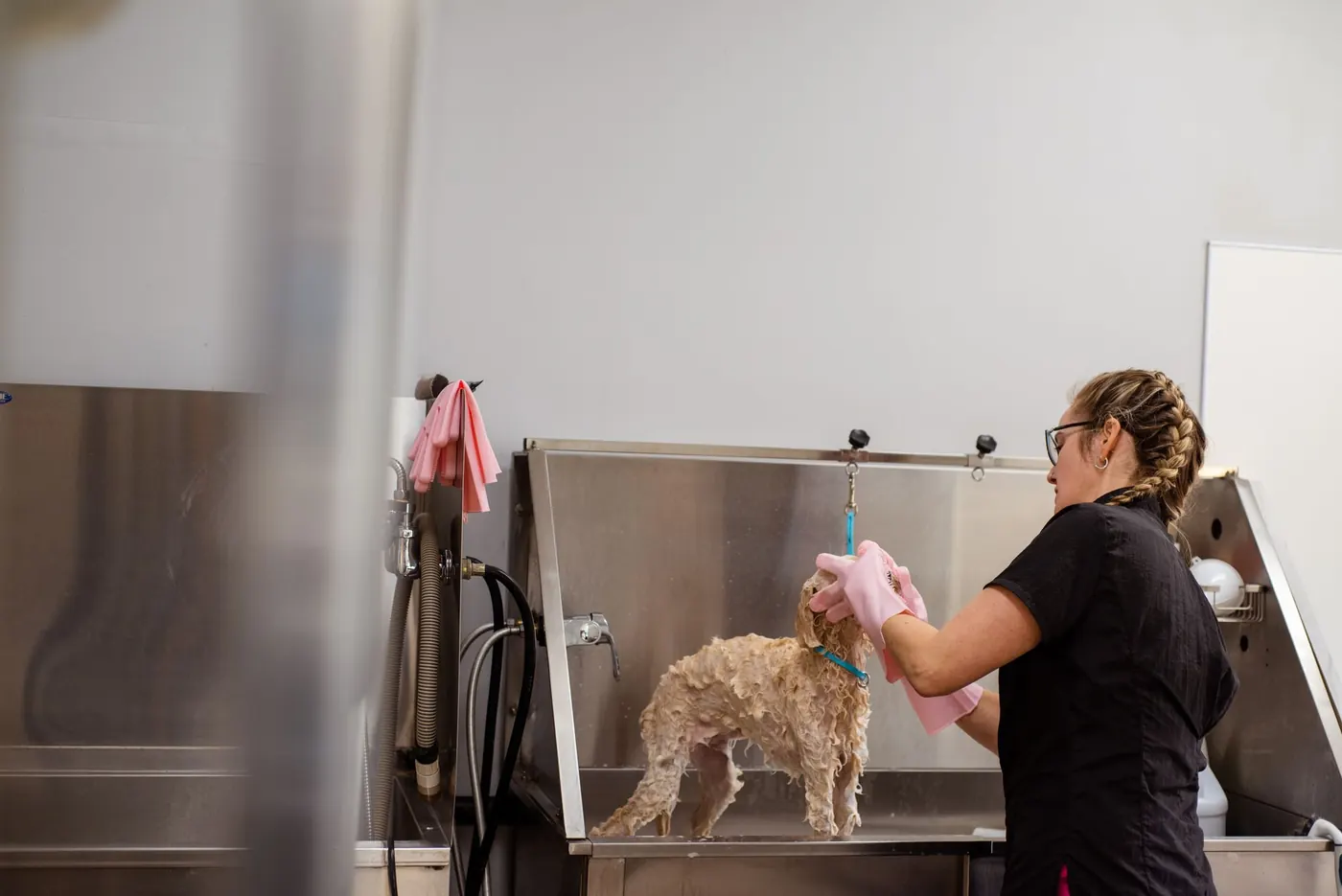
- Pick the Google Business Profile category that matches your main income, add only real secondary categories, and keep hours and photos current.
- Pet stores should build category and brand pages and show local availability, since same-day pickup is what online-only sellers cannot match.
- Mobile groomers should run as service-area businesses with a hidden address and unique, useful pages for each area they actually serve.
- Boarding, daycare and training sites win trust with clear policies, real photos, honest credentials and reviews gathered without any rewards.
SEO for pet shops starts with a simple fact: pet owners search for what they need right now, and they want it close by. "Pet store near me," "dog groomer open Saturday," "doggy daycare with openings" and "puppy training classes" are all local searches, and the businesses that appear in the map results and top organic listings get the calls, the bookings and the foot traffic.
This guide covers local SEO for pet businesses of every kind: retail pet stores and supply shops, groomers (including mobile groomers), boarding kennels and doggy daycares, and dog trainers. Each type searches, sells and serves differently, so each gets its own setup. If you run a veterinary practice, start with our companion guide to SEO for vets and veterinary clinics instead, because medical care has extra rules around credentials and trust.
What local SEO for pet businesses covers
Pet care local SEO is the work of making your Google Business Profile, website, listings and reviews tell search engines, and customers, exactly what you offer, where you offer it and why people trust you. Local SEO for pet shops and care providers is not one trick. It is a handful of connected jobs done carefully and kept up to date.
The first decision is what kind of business you are, because that sets your categories, your pages and your goals. Google lets you choose from its own list of business categories when you set up a profile, and the exact names change from time to time, so pick the closest match from what is offered at the time.
| Business type | Typical primary category | What searchers want | Key pages to build |
|---|---|---|---|
| Pet store or supply shop | Pet store or Pet supply store | A product, brand or same-day pickup nearby | Category, brand and "in stock" pages, store page |
| Groomer or mobile groomer | Pet groomer | An appointment, a price range, a breed-friendly groomer | Service pages, price guide, service-area pages |
| Boarding and daycare | Pet boarding service or Dog day care center | Safe care, availability, clear requirements | Boarding, daycare, evaluation and policies pages |
| Dog trainer | Dog trainer | Classes or private lessons for a specific problem or age | Class pages, private training, trainer profiles |
Many businesses are hybrids, such as a shop with grooming and self-wash stations. Choose the category that brings in most of your income as the primary one, add only the secondary categories you truly offer, and give each service its own page.
Search phrases to plan around
Group the searches your customers use by intent, then make sure each group has a page that answers it. The examples below are starting points to adapt to your town and your stock.
| Intent | Example searches | Where it should land |
|---|---|---|
| Shop for products | pet store near me, pet supply store open now, aquarium supplies in [city] | Profile, store page, category pages |
| Need it today | dog food in stock near me, cat litter pickup today | Product pages with availability, profile products |
| Grooming | dog groomer near me, mobile dog grooming in [town], puppy first groom | Service pages, service-area pages |
| Care while away | dog boarding near me, doggy daycare with openings, cat boarding | Boarding, daycare and policy pages |
| Training | puppy classes near me, dog trainer in [city], private dog lessons | Program pages, trainer profile |
Google Business Profile for pet shops and pet care businesses
For nearby searches, the profile usually matters more than the website, so set it up first. Our guide to Google Business Profile optimization goes deeper, and these are the points that matter most for pet businesses.
- Name: use your real signage name. Adding "Best Dog Grooming Cheap" breaks Google's guidelines and risks suspension.
- Hours: include drop-off and pick-up windows for boarding or daycare in the description, and set holiday hours early, since holidays are peak boarding dates.
- Services and products: list each service with a short description, and add the products you want to be known for, with accurate descriptions and prices if you can keep them current.
- Photos: show the storefront, shelves, grooming stations, play areas, kennels and the team. Real photos beat stock images. Get consent before posting pictures of customers or their pets.
- Booking and contact: add an appointment link that works on a phone and a phone number that is answered during your listed hours.
- Posts and updates: share new arrivals, class start dates and openings for boarding weekends.
Pet store SEO: product pages and local inventory
Pet store SEO has two jobs: help local shoppers find your shop, and help every shopper find the right product page. A store with a good profile but one thin "Shop" page will lose the product searches to the large online retailers. Aim to be the best answer for the searches that online-only sellers cannot match, such as same-day pickup or expert advice in town.
Build category and brand pages
Create a page for each major category you stock, such as dog food, cat litter, aquarium supplies, bird seed and small-animal bedding, and a page for each brand you are proud to carry. Write unique copy for each: what you stock, what sizes and types, and what your staff can help with in store. Keep claims about diet, health or treatment out of your marketing, and point owners to their veterinarian for medical questions.
Show local inventory and "in stock near me"
Searches like "in stock near me" or "pet food available today" are strong buying signals. Google Merchant Center supports local inventory data, which lets shoppers see that a product is available at a nearby store, and it works with many point-of-sale systems. Check Google's current requirements and your system's integration before you plan on it. Even without it, you can add a simple "check availability" form or phone prompt on product pages and keep Google Business Profile product entries current.
If you want paid visibility for those product searches as well, our Google Shopping ads management is a related option, but organic listings and a clean product feed should come first.
Online store or local pickup: choosing how customers buy
Your SEO plan depends on whether you sell nationally, locally or both. Treat them as two plans that share a website.
- Local pickup and delivery: focus on the profile, local inventory and pages that name your delivery area. Add a "buy online, pick up in store" explanation that says exactly when orders are ready.
- Online store: competition is national, so product pages, category structure and site speed matter more. Our ecommerce SEO service and the guide to SEO for e-commerce explain the work involved.
- Both: keep the store page and product pages consistent in price, hours and stock, because mismatched information frustrates shoppers and weakens trust in your listings.
Be honest about what you can do best. A neighborhood shop will rarely beat a national chain for a bag of generic kibble, but it can win for specialty brands, fresh food, live animals, expert fit advice and "I need it today." In-store events such as adoption days, workshops and wash-station nights also give you local pages and photos that big online sellers cannot copy.
Dog groomer SEO, including mobile groomers
Dog groomer SEO is built on service pages and trust. Owners want to know who will handle their dog, what each service includes and what it costs. Make a page for each core service, such as full groom, bath and brush, nail trims, de-shedding and puppy first groom, with a short "what to expect" section.
Setting up a mobile groomer as a service-area business
If you groom from a van and customers never visit a shop, set up your Google Business Profile as a service-area business and hide your street address. List the towns and neighborhoods you actually serve, and keep the list realistic, since Google limits how many areas you can add. Do not claim a physical location you do not have, because fake addresses are a common reason for suspensions.
- Choose a primary category of Pet groomer and add any real secondary categories.
- Hide your address and add your service areas, starting with the places you can reach quickly.
- Create a page for each main service area, with real details: neighborhoods covered, which days you travel there and how to book.
- Show photos of your van and your work, with owner consent.
- Collect reviews that mention the neighborhood, if customers choose to do so naturally.
Avoid dozens of near-identical town pages. A page needs unique, useful information about that area, or it should not exist.
Pet boarding and doggy daycare SEO
Pet boarding and doggy daycare SEO is mostly about reassurance. Owners are leaving an animal in your care, so the pages that win are the ones that answer worries before they are asked. Write a page for boarding, a page for daycare and a page for your policies, and link them together.
- Requirements: state your vaccination and health-record policy, your temperament evaluation process and what to bring. Present these as your rules and tell owners to check details with their veterinarian.
- Facility: real photos and descriptions of play areas, sleeping spaces, cleaning routines and outdoor access.
- People: introduce the team, and list any training or certifications they actually hold.
- Licensing and insurance: mention the licenses your local authority requires and whether you carry insurance, only if true and current.
- Availability: a simple booking or inquiry form, with a note about busy periods such as school holidays.
If you are a veterinary clinic that also boards pets, link the boarding page to your clinic's care pages, and keep medical content separate from the care service pages.
SEO for dog trainers
Dog trainers sell skill and results, which makes trust the main ranking and conversion factor. Build one page per program, such as puppy classes, basic obedience, private lessons and board-and-train, with ages, class length, schedule and price or price range. Do not guarantee outcomes. Describe what you teach and how you teach it.
Add a trainer profile with real qualifications, explaining any certification you hold, what it covers and who issues it. If you use a training philosophy, explain it plainly, because owners search for it. Short videos of a class in progress, shot with owners' permission, do more to persuade than paragraphs. For behavior concerns that may have a medical cause, say that owners should consult their veterinarian.
Local search terms trainers should plan for include "puppy classes near me," "dog trainer in [city]" and the neighborhood or park where classes meet. Create a page for each location if you run classes in more than one place, and keep the schedule current.
Content, reviews and local links that build trust
Pet owners love sharing their animals, which makes reviews and photos easy to earn, as long as you follow the rules. Ask every customer for a review, never offer discounts, free baths or free daycare days in return, and never write reviews yourself. Reply to every review, and keep replies friendly and brief. Our reputation and review management service shows how a compliant system works.
Content should answer practical local questions, not give medical advice. Good topics include how to prepare for a first groom, what a boarding stay looks like day by day, dog-friendly parks and patios in your area, and what to look for in a puppy class. For health questions, point to a local veterinarian.
Local links come from relationships. Partner with shelters and rescues for adoption days, sponsor local dog events, join the chamber of commerce and trade with other pet-friendly businesses. Ask each partner to link to your site with your correct name, address and phone number.
A 30, 60 and 90-day plan for pet care local SEO
You do not need to fix everything at once. Work in this order and keep a simple log of what you change.
- Days 1 to 30: claim and complete your Google Business Profile, fix your name, address and phone number across Apple Business Connect, Bing Places, Yelp and Facebook, and set up Google Search Console and GA4.
- Days 31 to 60: build your core pages: services, categories, boarding or class pages, your policies and a clear contact and booking page. Add real photos and start your review requests.
- Days 61 to 90: add service-area or product pages that have unique detail, secure a few local partner links, and review your results.
Throughout, make booking easy. A phone user should be able to tap to call, see a price range or "from" price for each service, and request a time without creating an account. Every extra step costs you a customer who may simply call the next groomer, daycare or shop on the list.
How to measure results and avoid common mistakes
Track the actions that make money: phone calls, direction requests, booking form submissions, online orders and in-store pickups. A tracked phone line, as described in our call tracking service, shows how many calls come from search. Ask new customers how they found you. Use Google Search Console to see which searches bring clicks, and compare month against month rather than day against day.
The mistakes below show up often in SEO for pet shops and care businesses:
- Putting every service on a single page.
- Publishing near-identical pages for every town.
- Using a fake address or a keyword-stuffed business name.
- Letting prices, stock or holiday hours go out of date.
- Making health claims about food or treatments.
- Posting customer pets' photos without permission.
If you would like a team to take this on, Growth Asteroid provides local SEO services for businesses with one or many locations, starting from $575 per month per location.
Frequently asked questions
What is the best SEO strategy for pet shops?
Start with a complete, accurate Google Business Profile, then build category, brand and service pages that answer what local shoppers search for. Add local inventory or availability prompts, keep hours and prices current, and collect reviews honestly. Focus on what you do better than online-only sellers, such as same-day pickup, specialty products and expert advice.
How do mobile dog groomers set up their Google Business Profile?
Mobile groomers should set up a service-area business, hide the street address and list the towns or neighborhoods they actually serve. Choose Pet groomer as the primary category, add real photos of the van and work, and build a page for each main area with useful local detail. Never use a fake address.
Can pet stores show products are in stock nearby?
Often yes. Google Merchant Center supports local inventory data that can show shoppers a product is available at a nearby store, and it works with many point-of-sale systems. Check Google's current requirements and your system's integration. If it is not possible, add availability prompts to product pages and keep profile product entries accurate.
What pages does a doggy daycare or boarding business need?
Build a boarding page, a daycare page and a policies page covering vaccination and health-record requirements, temperament evaluations, what to bring and drop-off times. Add real facility photos, staff introductions and your licensing details if they apply. Present requirements as your rules and tell owners to check health questions with their veterinarian.
Can I offer discounts for pet business reviews?
No. Offering discounts, free services or entries into a drawing in exchange for reviews goes against Google's policies and can get reviews removed or your profile penalized. Ask every customer for an honest review, make it easy with a link or QR code, and reply to each review without sharing private customer or pet details.